🏍️ TVS Centra Restoration — Bringing Dad’s Bike Back to Life
Reviving the TVS Centra that carried my father for 20+ years and 100,000+ km, using good parts from a ₹3,000 junkyard donor bike — plus an LED headlight and a full AC→DC electrical conversion. A father-and-son project, done at home, in our spare time.
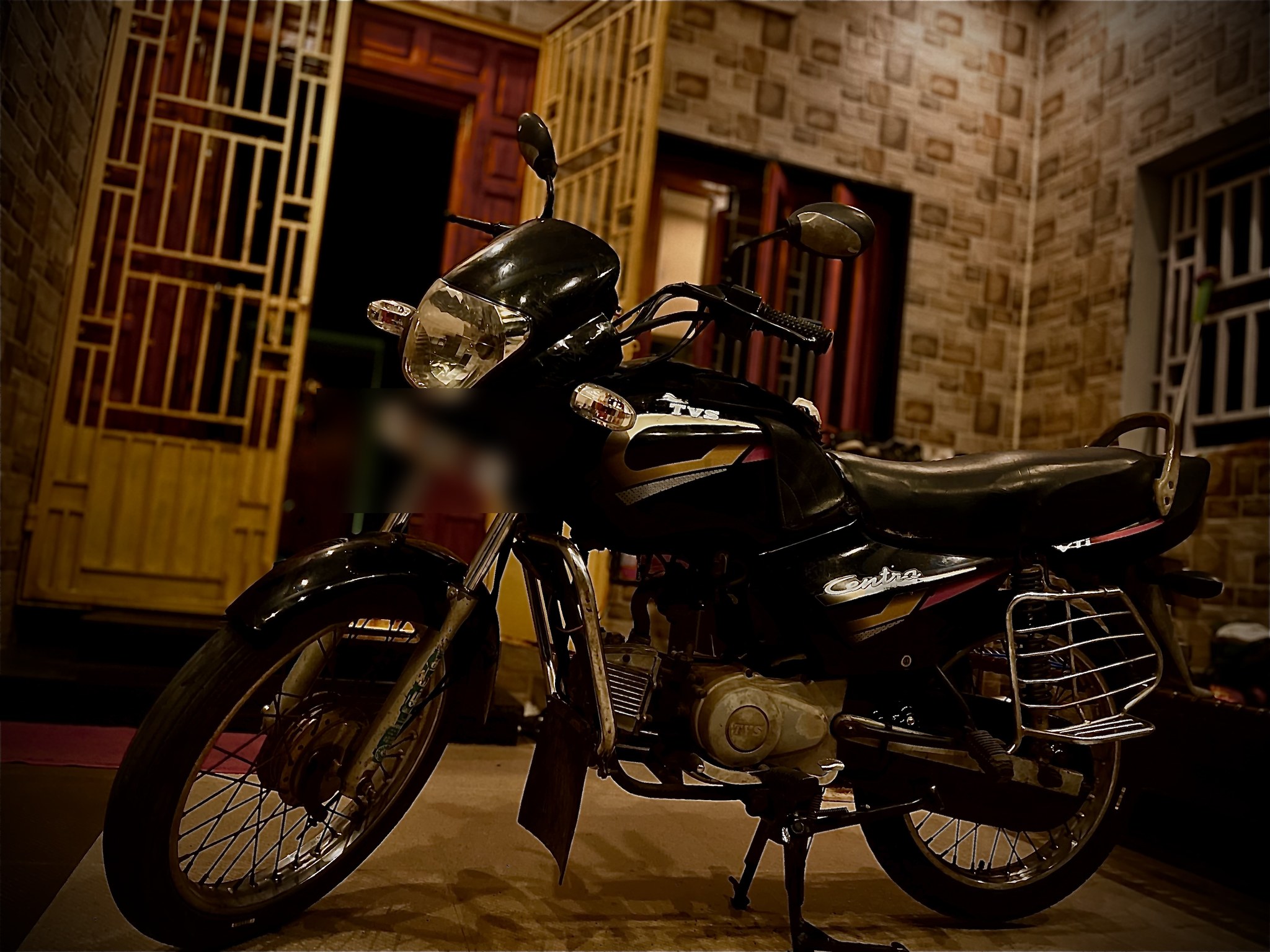
The story
My father bought this TVS Centra back in 2004. It carried him for more than twenty years and over 100,000 km. In its last couple of years the plastic side panels cracked, the starter coil burnt out, and the bike ended up standing unused for over a year, quietly gathering rust in the corner.
I didn’t want it to end there — so I decided to bring it back.
I found a second TVS Centra in a scrapyard and bought it for just ₹3,000. It had run only about 12,000 km and was mechanically healthy, so it became the donor: I took its good parts, moved them onto my father’s bike, upgraded the lighting, and rewired the whole electrical system. Somewhere in the middle of all that grease, I ended up learning how a lot of this old machinery actually works.
This is the photo journal of that build.
| Dad’s bike | The donor | |
|---|---|---|
| Role | The bike being restored | Parts donor |
| Owned since | 2004 — 20+ years | Bought for this project |
| Distance run | 100,000+ km | ~12,000 km |
| Cost | Our family bike | ₹3,000 |
| Condition | Rusty, cracked panels, burnt coil | Good mechanicals, worth stripping |
Before ➜ After
Before — torn seat, rust, dead for a year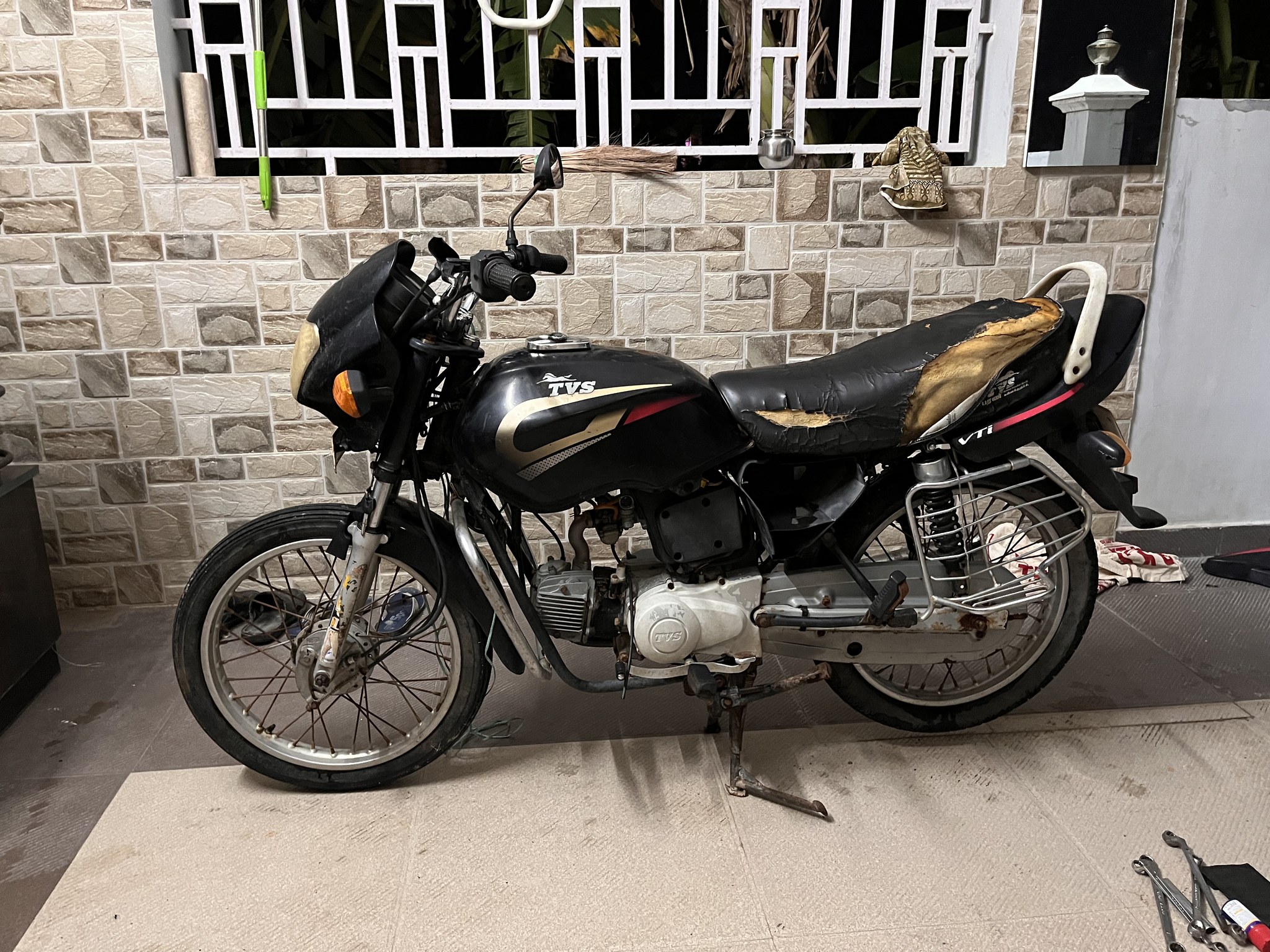 |
After — back together and running |
What we did
Parts moved from the donor ➜ Dad’s bike
- 🔌 Starter coil — replacing the burnt-out one that had stranded the bike
- 🎛️ Front dash / speedometer console — the whole instrument cluster
- 🦵 Center stand
- 🪝 Two front fork suspensions
Upgrades & electrical work
- 💡 Fitted a modern LED headlight
- ⚡ Converted the headlamp and the entire electrical system from AC to DC, so the lights glow steadily instead of pulsing with engine revs
Salvaged & kept from the donor
- 🛠️ The donor’s old engine was removed and preserved for future use
- 🔧 The old rusty silencer was taken off and replaced
The build, in photos
🩹 Before the rescue

This is how Dad’s bike stood — a complete black Centra in left-side profile, seat torn with the foam bursting out, surface rust creeping across the grab rail and frame. Everything was still there (forks, spoked wheels, engine, exhaust), but a year of standing still had taken its toll.
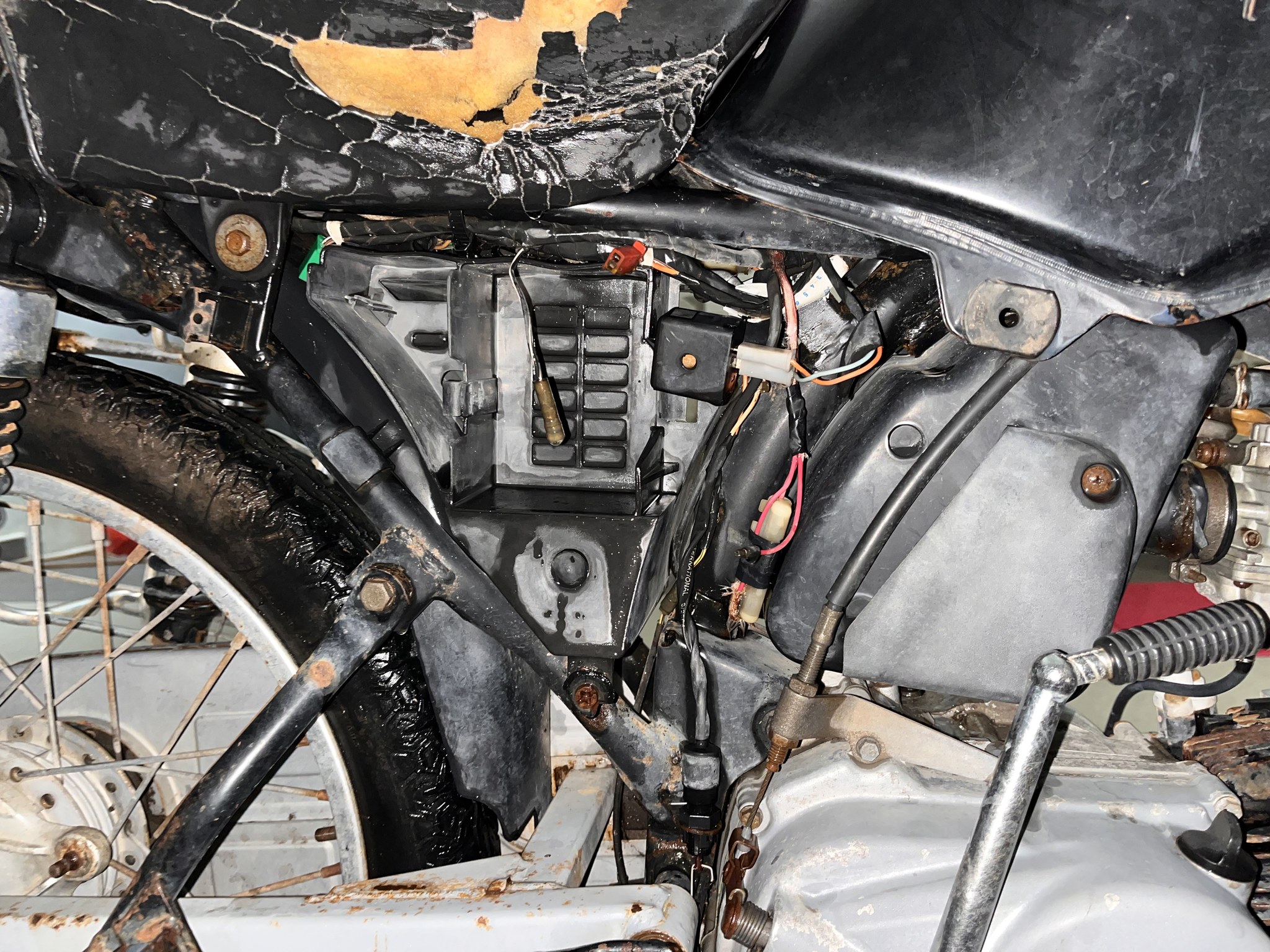
The cracked, peeling side panel and the exposed fuse/relay box behind it — a tangle of red, pink, green and white connectors, and rust on the frame tubes and bolts. This is the “before” that started the whole project.
🔩 Teardown
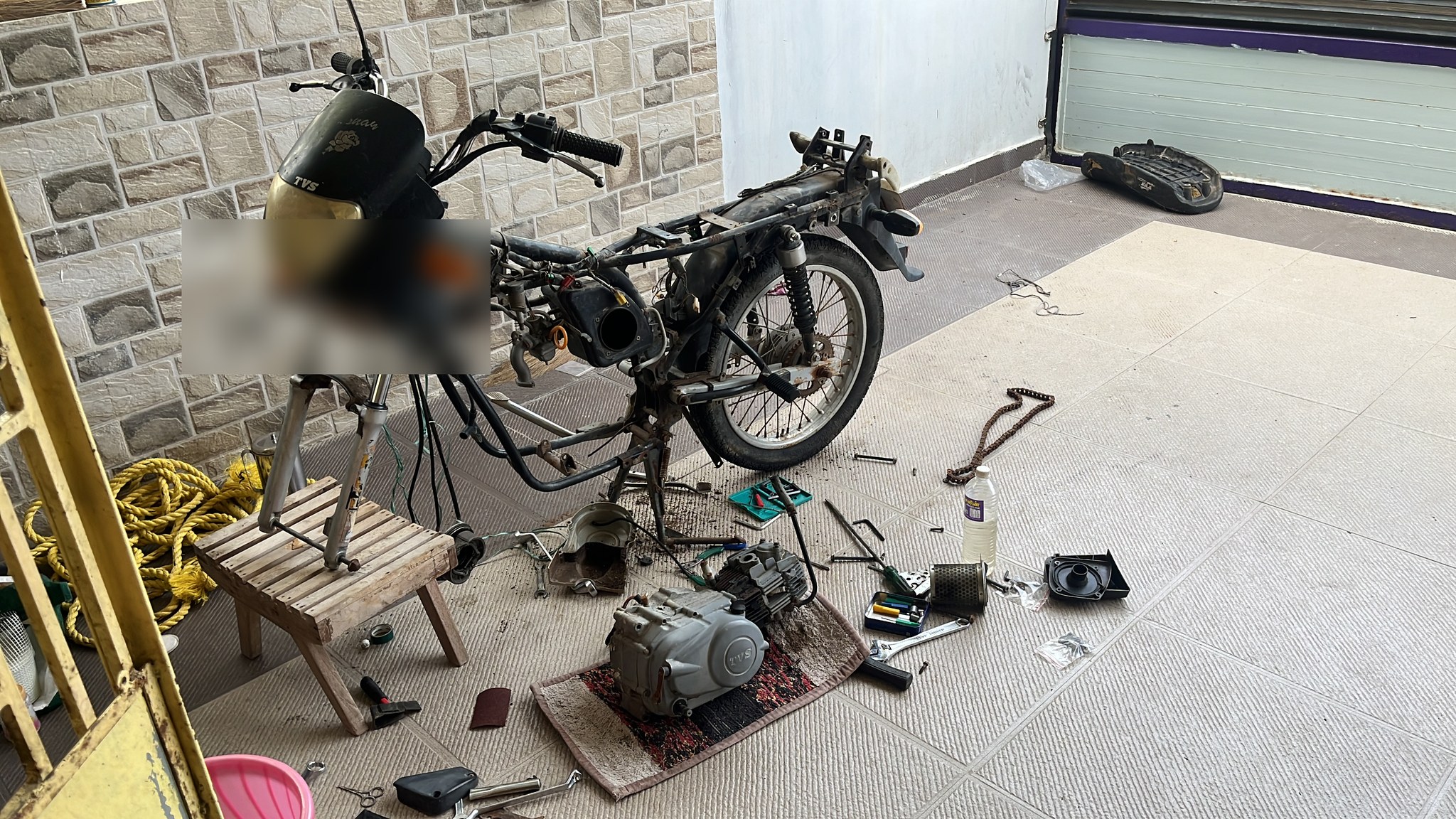
Mid-teardown on the veranda: the front frame with forks propped up on a stool, the rear frame exposed, and the engine sitting on a rug on the floor surrounded by headlight bowls, the drive chain, spanners, screwdrivers and pliers.
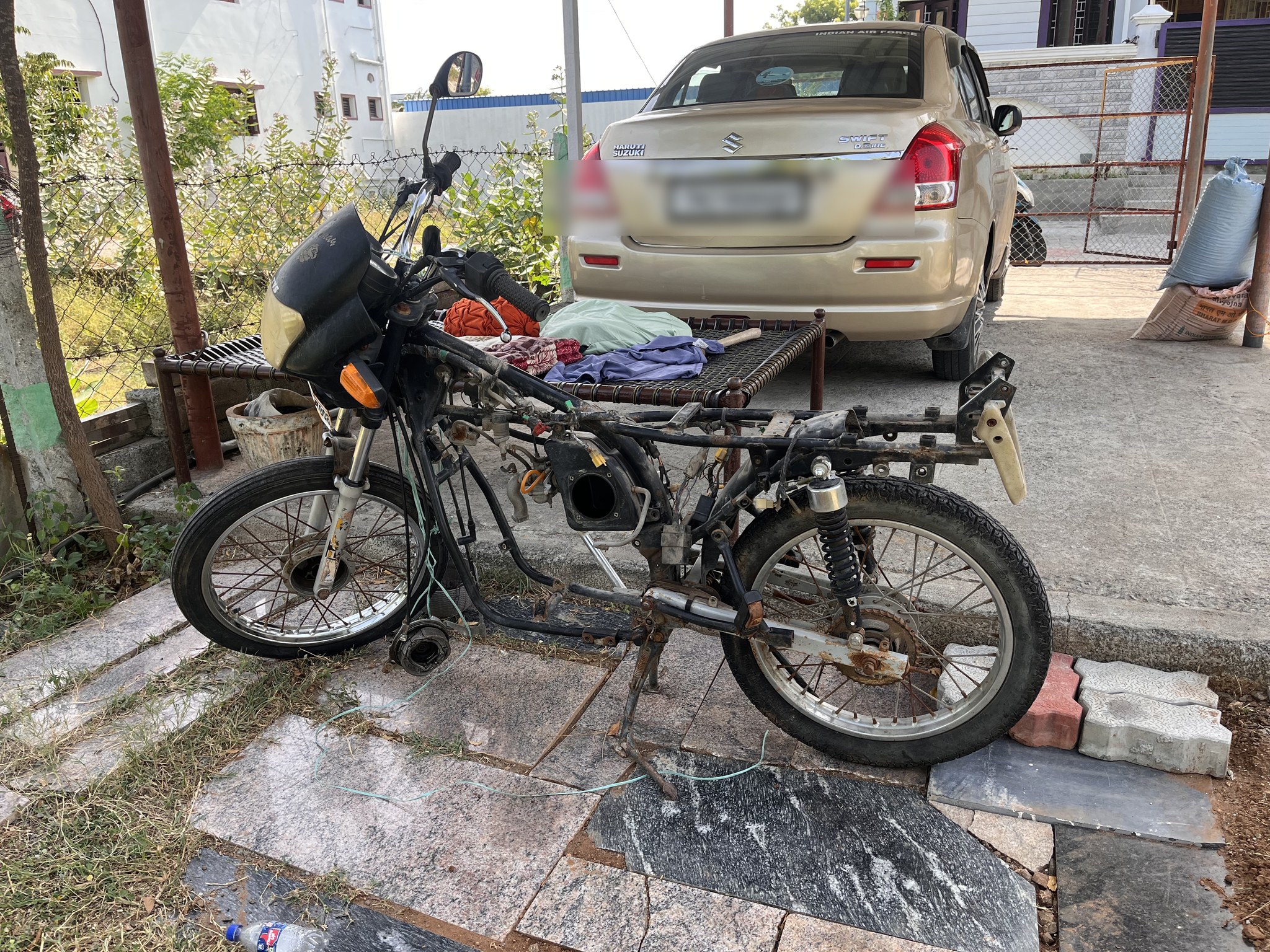
Reduced to a bare rolling chassis — both wheels, forks, handlebar and rear shock still on, but engine, seat, tank and panels stripped away, leaving the empty frame cradle and the loose wiring loom hanging.
⚙️ Engine & carburettor
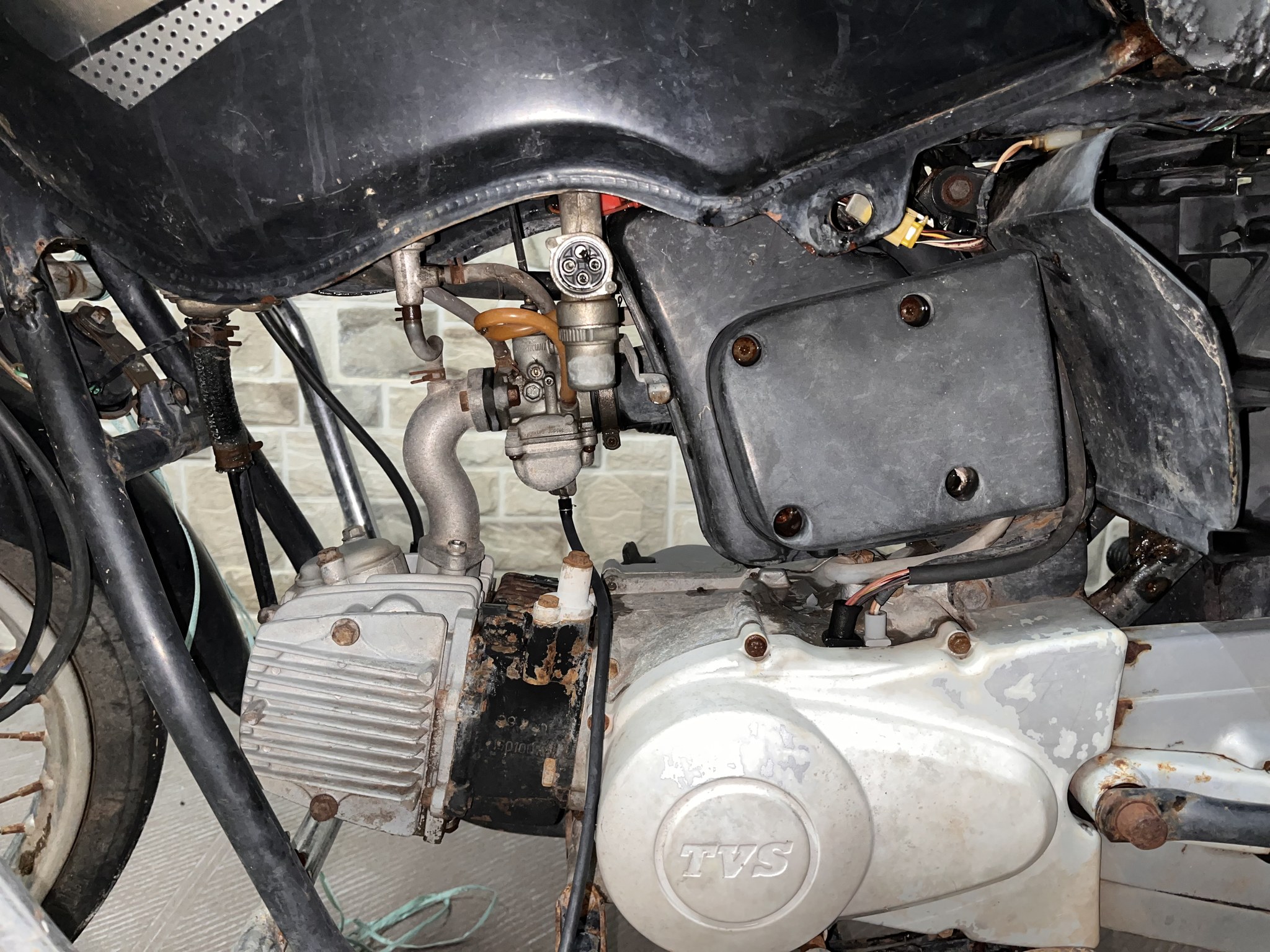
The lower end before we began — the TVS-stamped side cover, the carburettor with its orange fuel line, the fuse/junction box and the stock loom, all under a coat of surface rust on the engine mount plate.
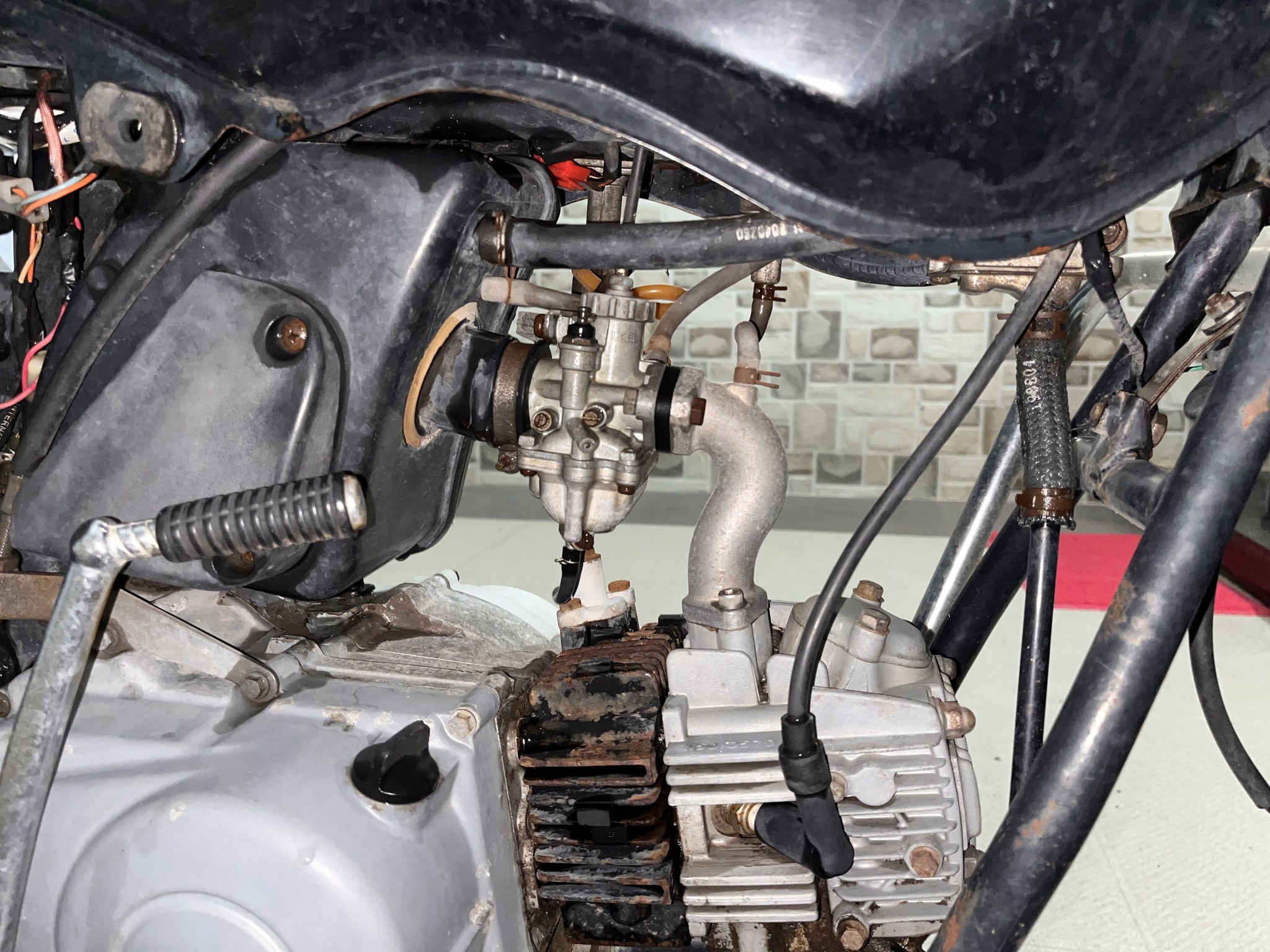
The right side of the engine in detail: the carburettor feeding the curved metal intake manifold, and the finned cylinder head with its black spark-plug cap and ignition lead. You can pick out the throttle/choke cable and the kick-lever return spring — learning how the carburettor meters fuel and air was one of the highlights of this build.
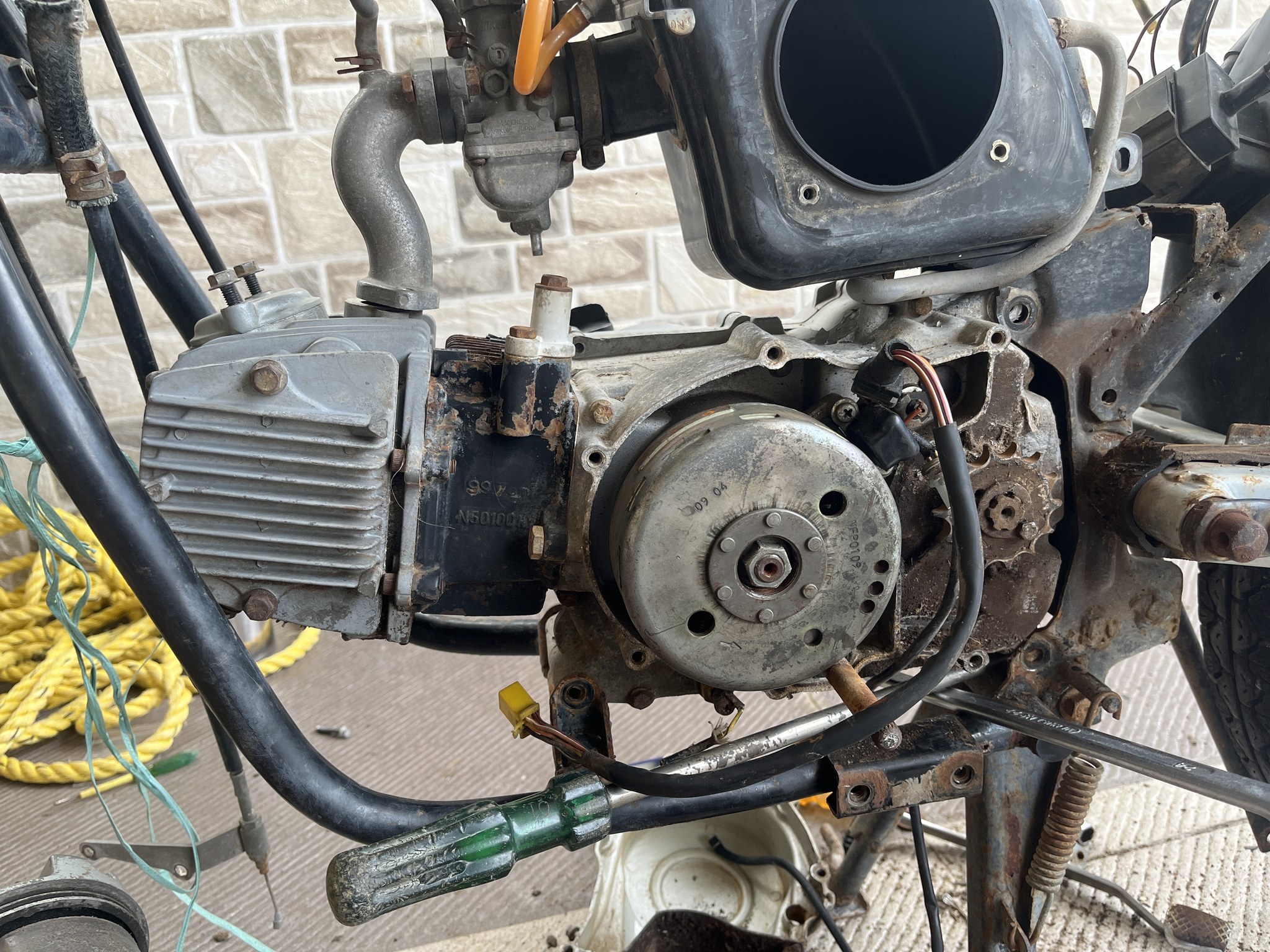
Dismantling with the magneto/flywheel rotor exposed on the right, brown ignition wiring routed around the crankcase — this is the area around the starter coil, the part that had failed.
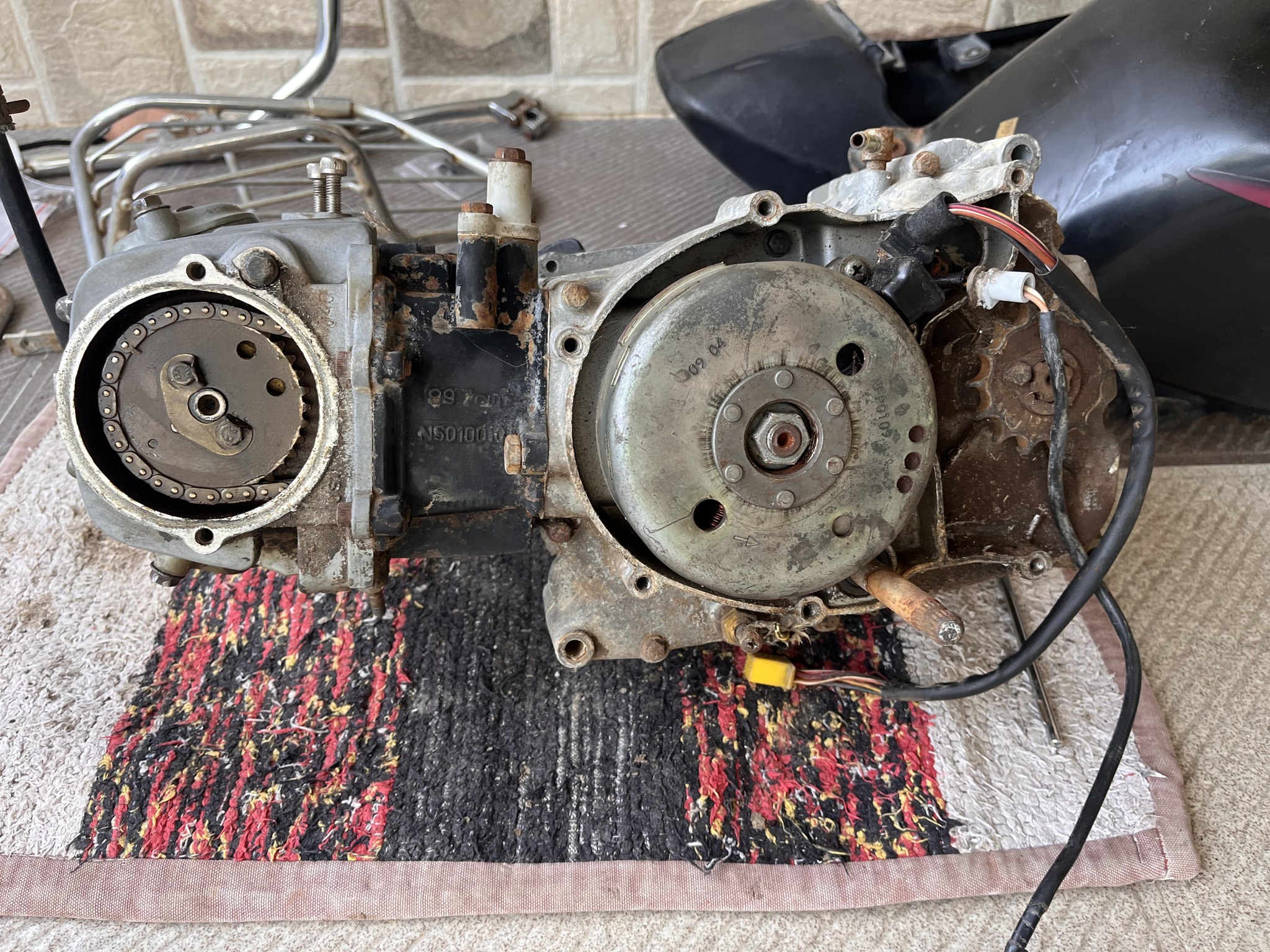
The engine out of the frame: on one side the cam sprocket and chain, on the other the flywheel magneto with its centre nut and cooling fins.
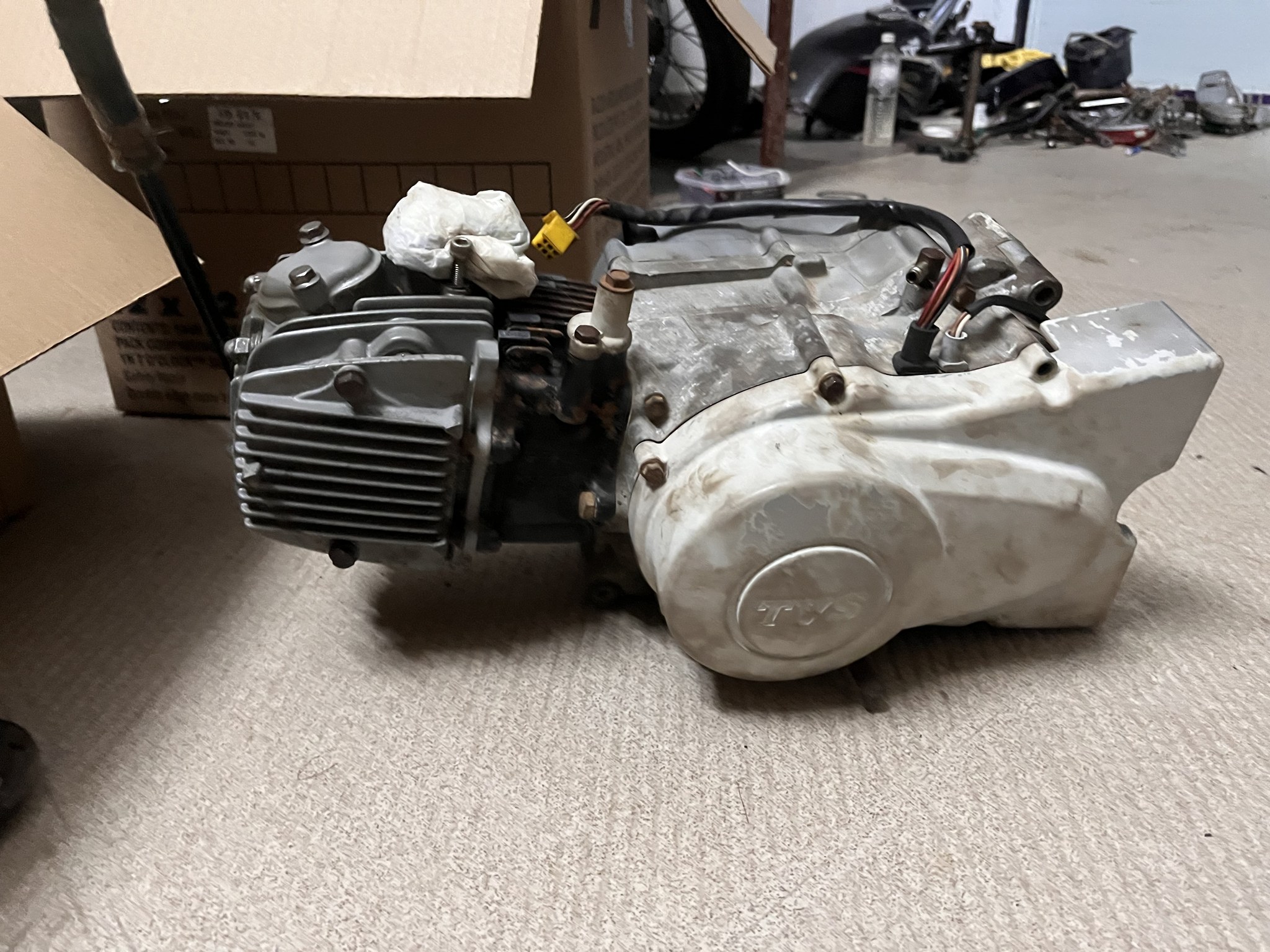
The complete engine-and-gearbox unit set down — finned head on the left, the TVS-cast clutch cover on the right, intake plugged and wiring pigtails hanging. Getting to see the clutch pack up close is where I learned how the friction plates engage and disengage the drive.
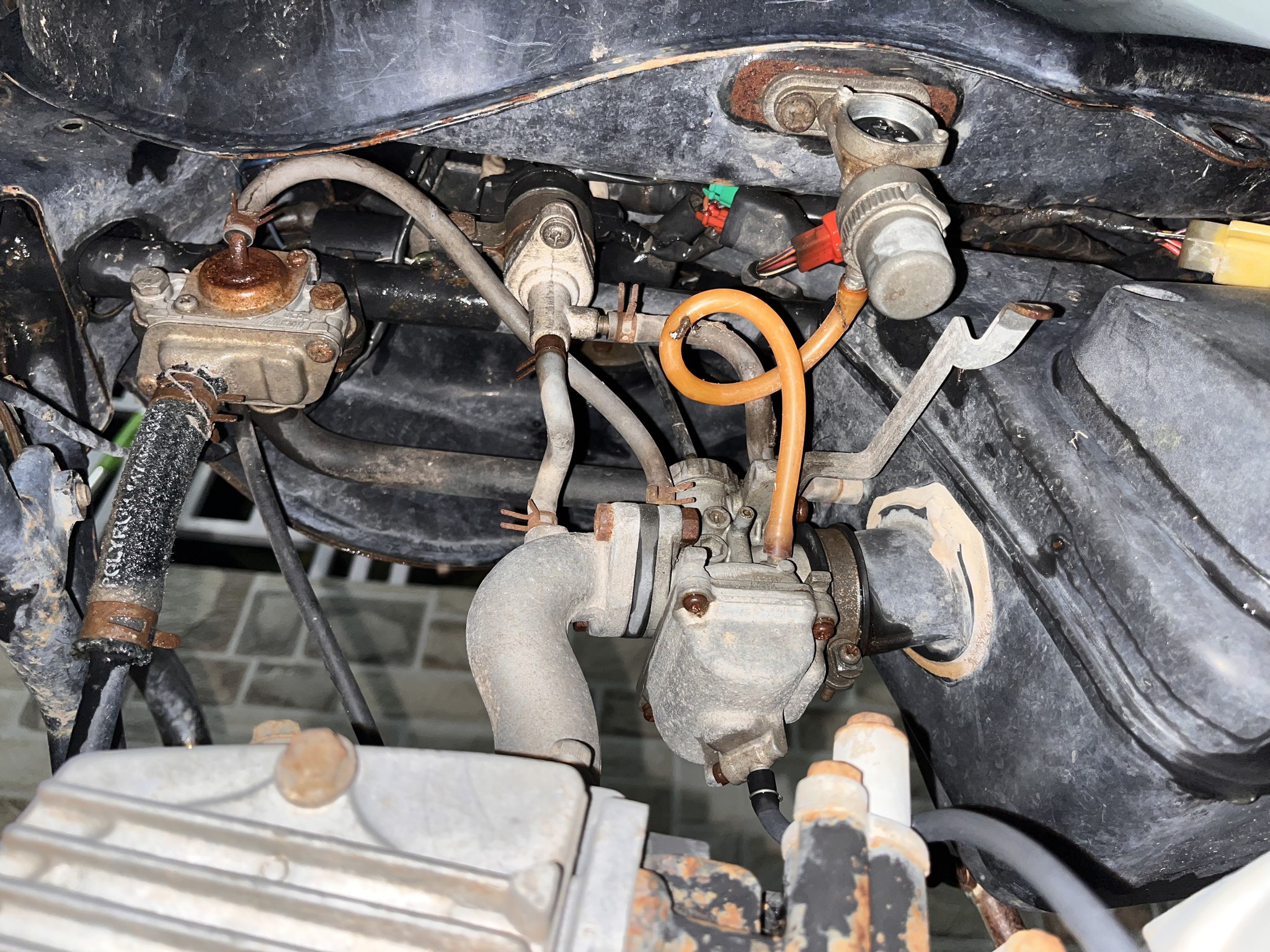
Under the tank: the carburettor with its metal and rubber fuel lines, the looped overflow hose, the fuel tap, and the cluster of multi-pin couplers that all had to be traced and understood during the rewire.
🔥 The burnt starter coil
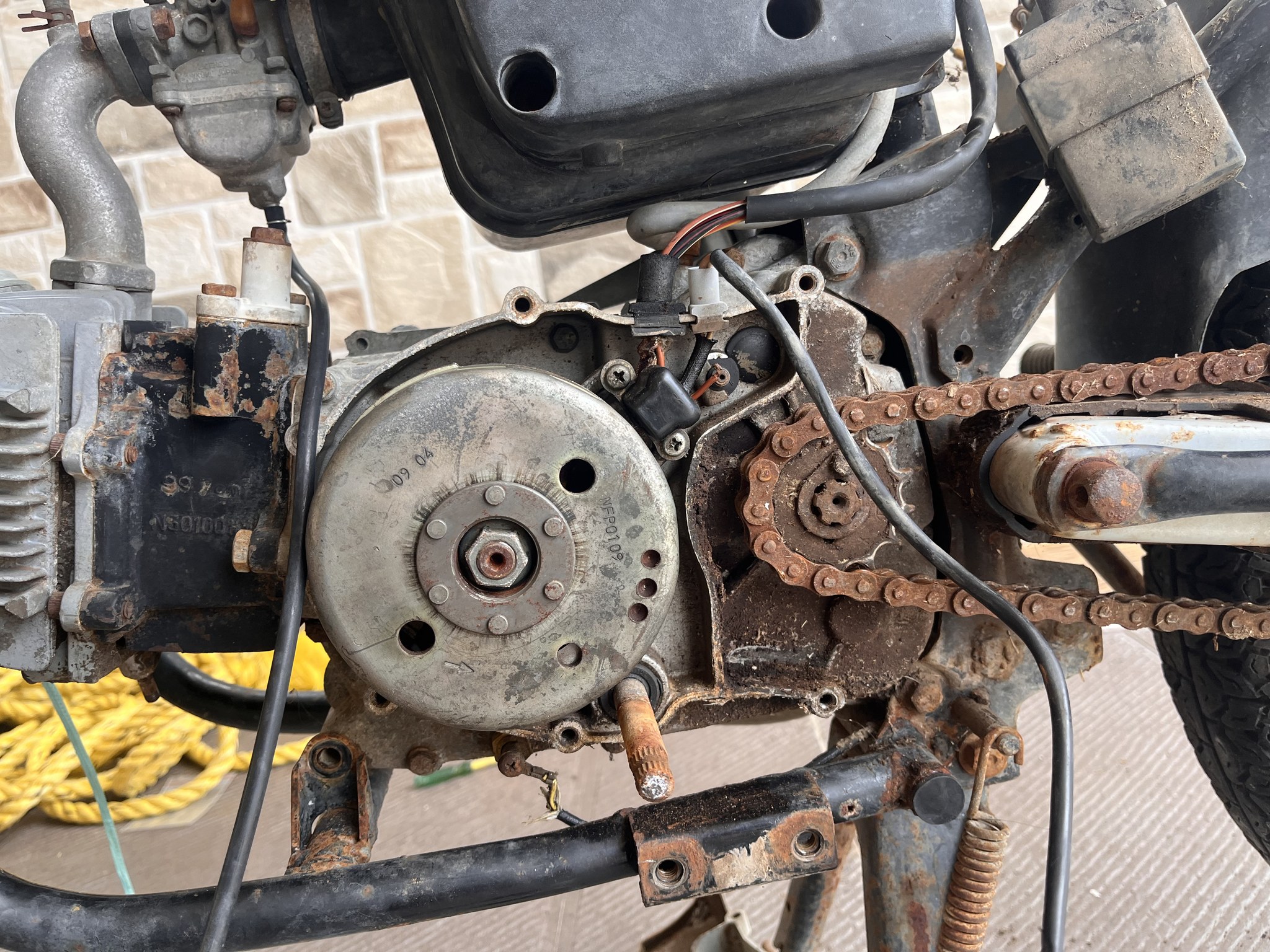
The flywheel magneto/generator cover, front drive sprocket and chain. Behind this cover sits the coil — the burnt one here was the reason Dad’s bike wouldn’t start. The donor’s good coil went in to replace it, and that’s what finally brought the bike back to life.
🎛️ Speedometer & dash
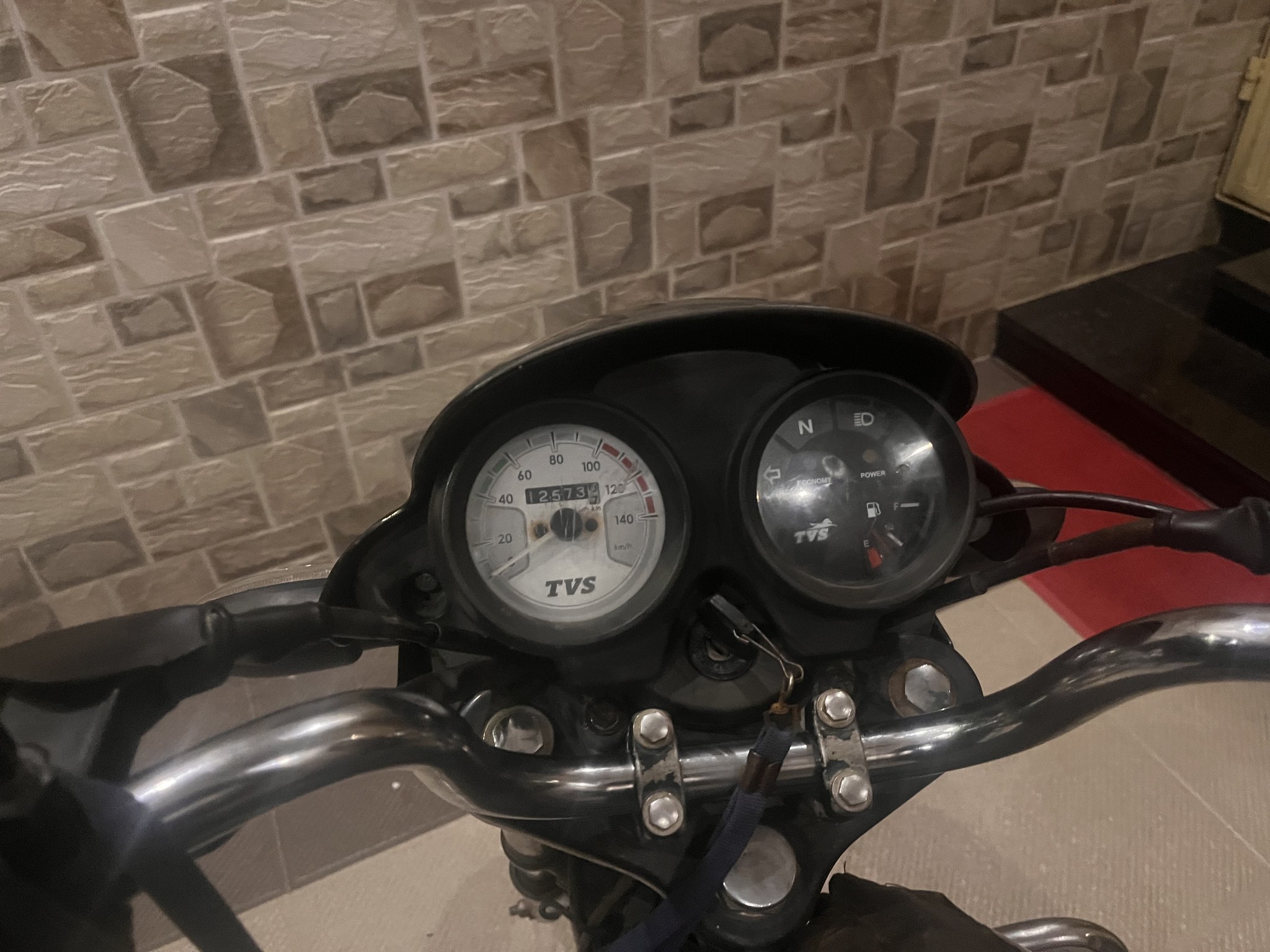
The instrument cluster transferred from the donor — the round TVS speedometer (0–140 km/h), the neutral / high-beam / power / fuel lamps, and the odometer still showing the donor bike’s low mileage.
🦵 Center stand
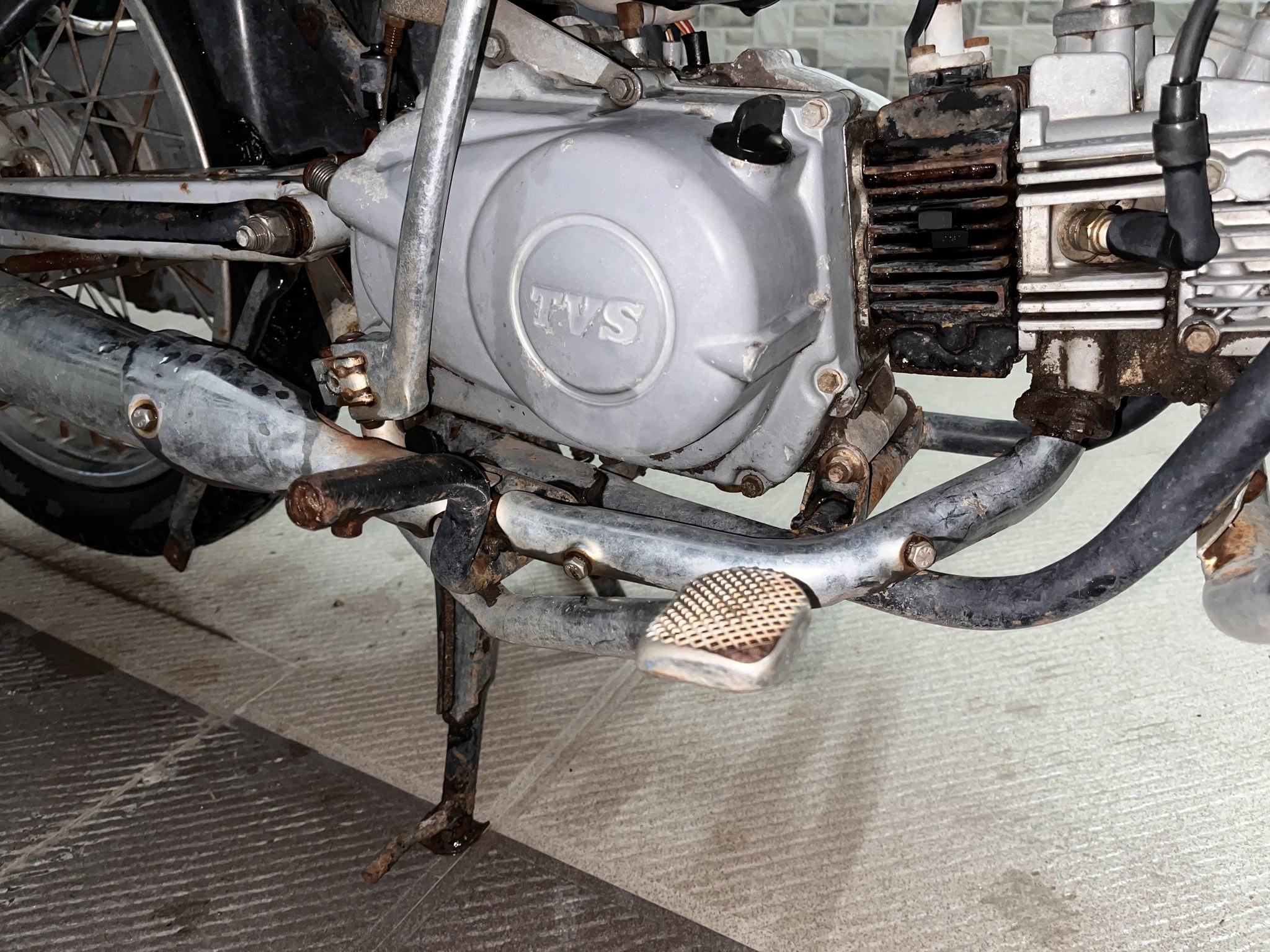
The centre stand — another part harvested from the donor — under the engine’s lower end, with the exhaust running back toward the rear wheel.
⚡ Electrical & the AC→DC conversion
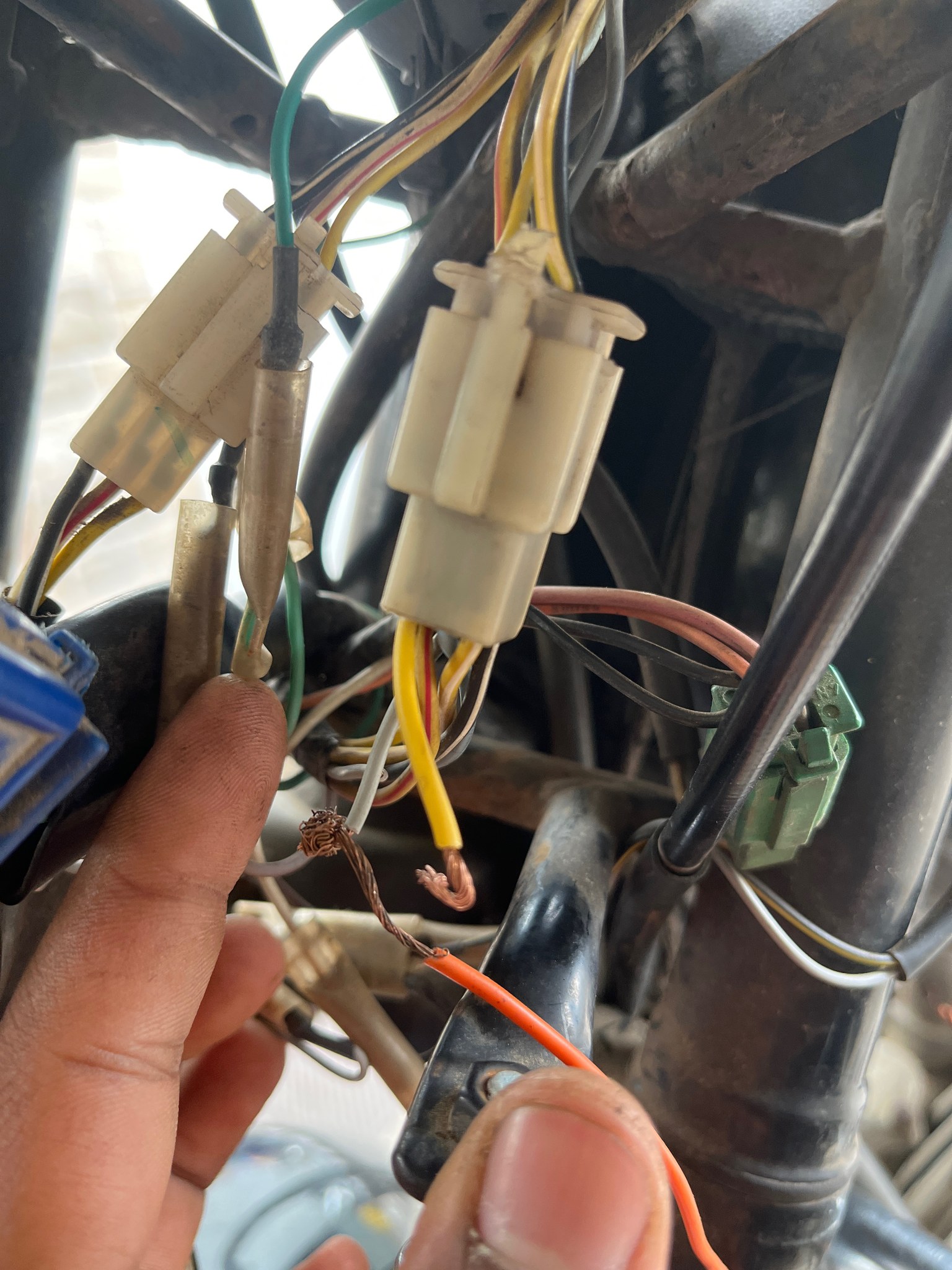
Splicing the harness during the AC→DC conversion — coloured wires, bullet terminals, exposed copper strands being twisted together, and a relay block on the frame.
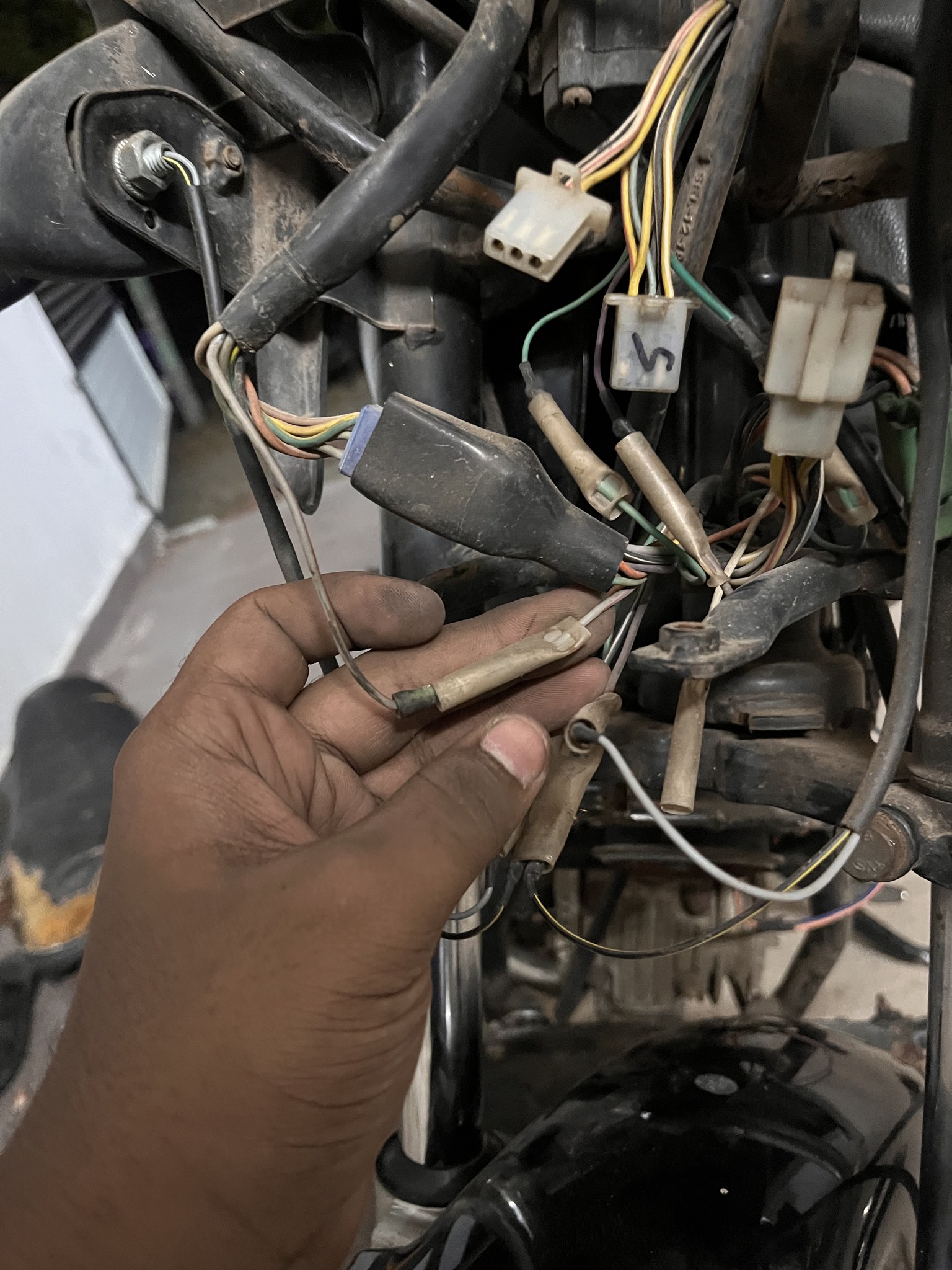
Pulling the front harness out at the headstock — block connectors, a rubber-booted plug and taped joints, right in the middle of the rewire.
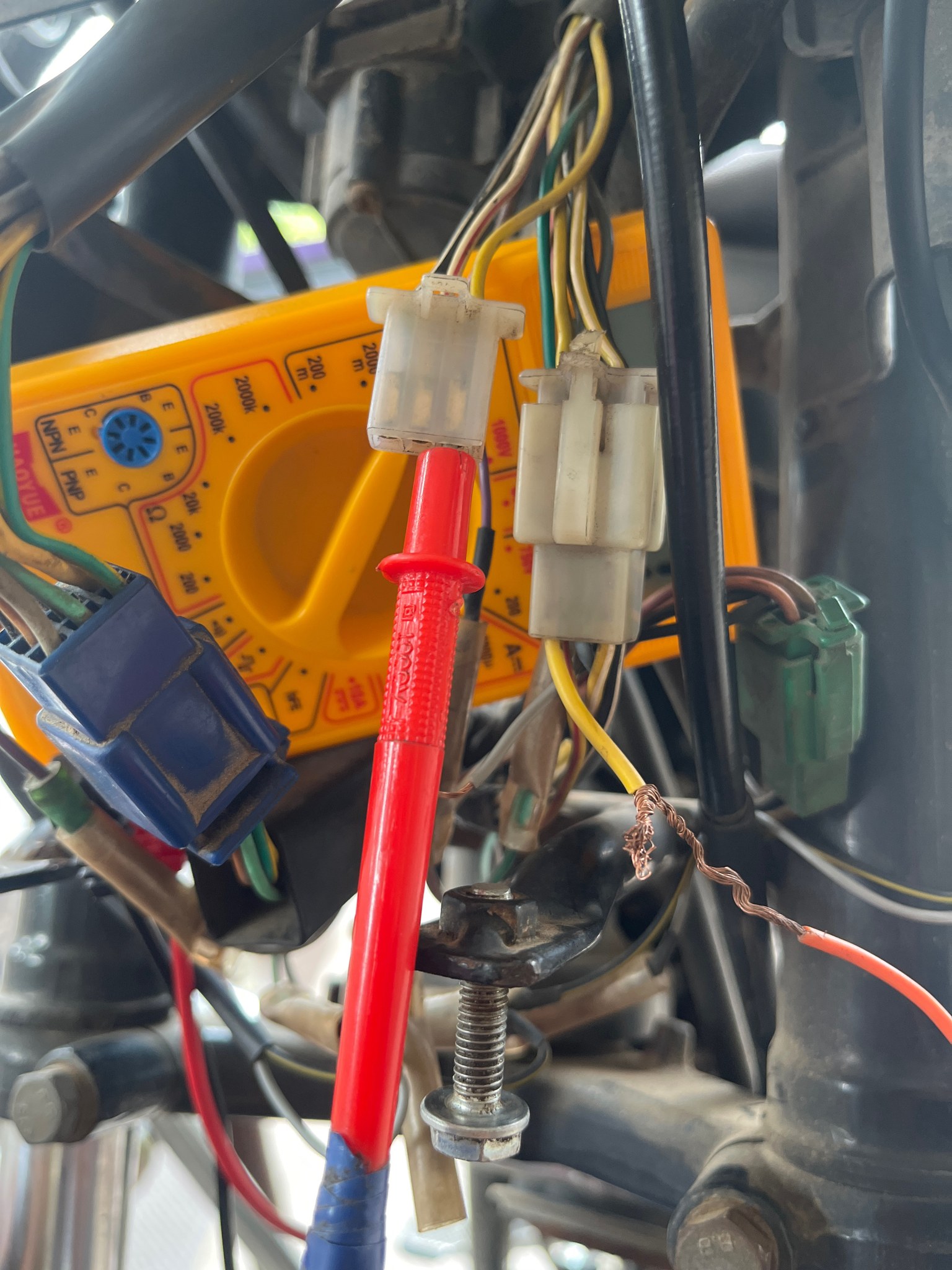
Checking continuity with the multimeter as the new DC circuit came together — probing the connectors to make sure everything was fed the way it should be.
💡 The LED headlight
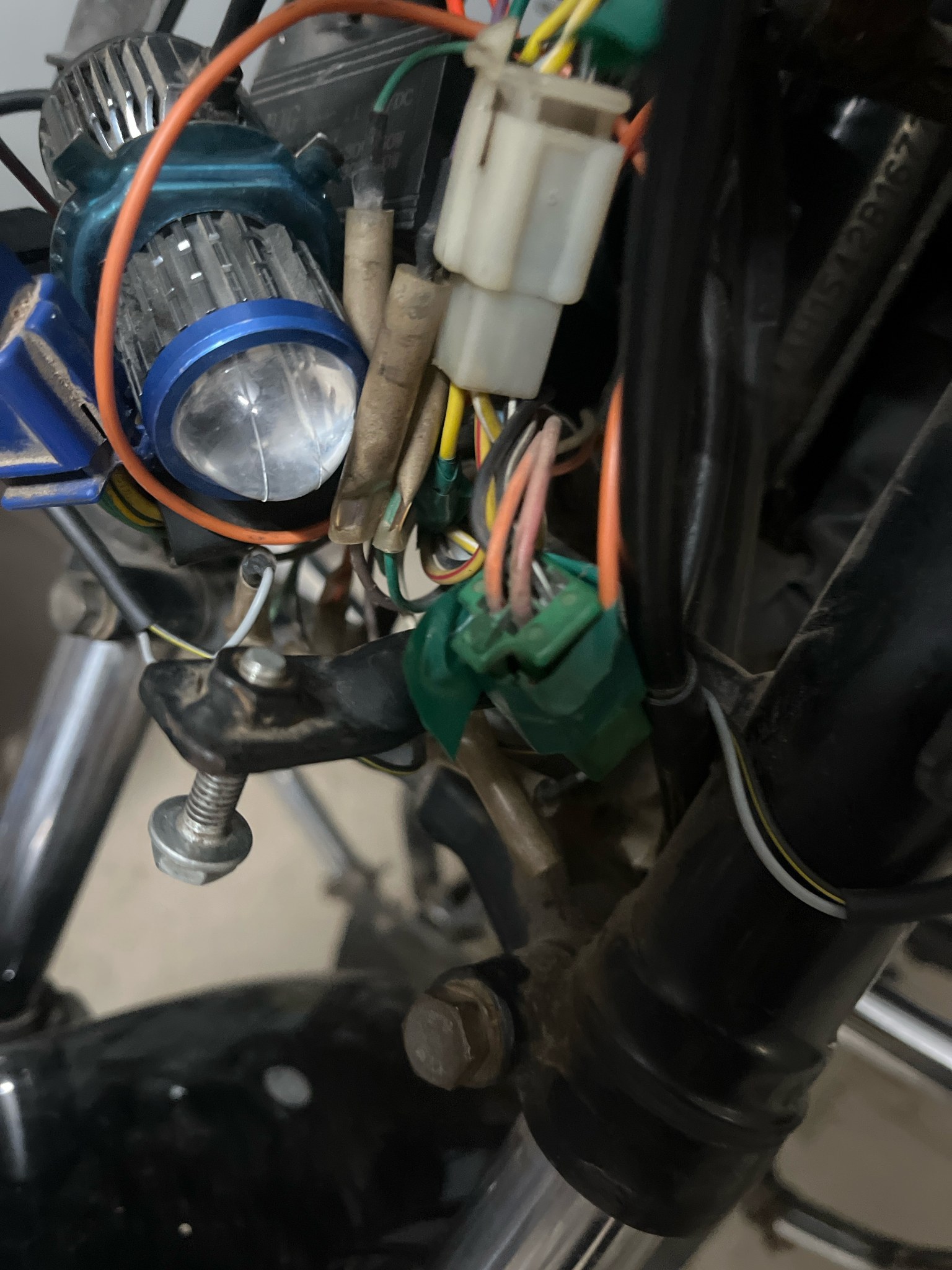
The new LED headlamp with its finned heatsink, wired into the DC supply — low wattage, runs cool, and glows steadily at any engine speed instead of pulsing the way the old bulb did.
📦 Preserved & harvested
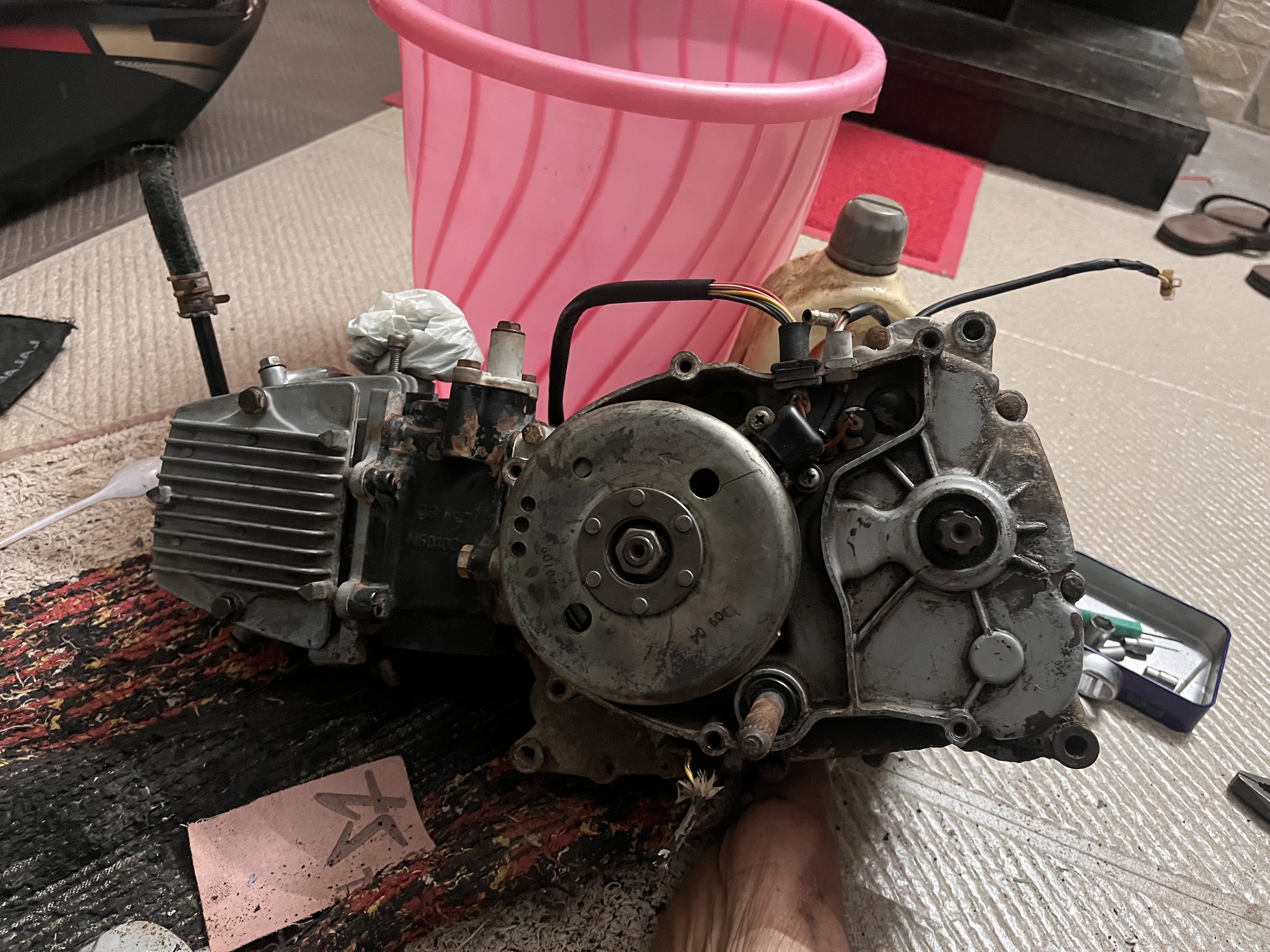
The donor’s old engine, lifted out and set aside — kept for future use.
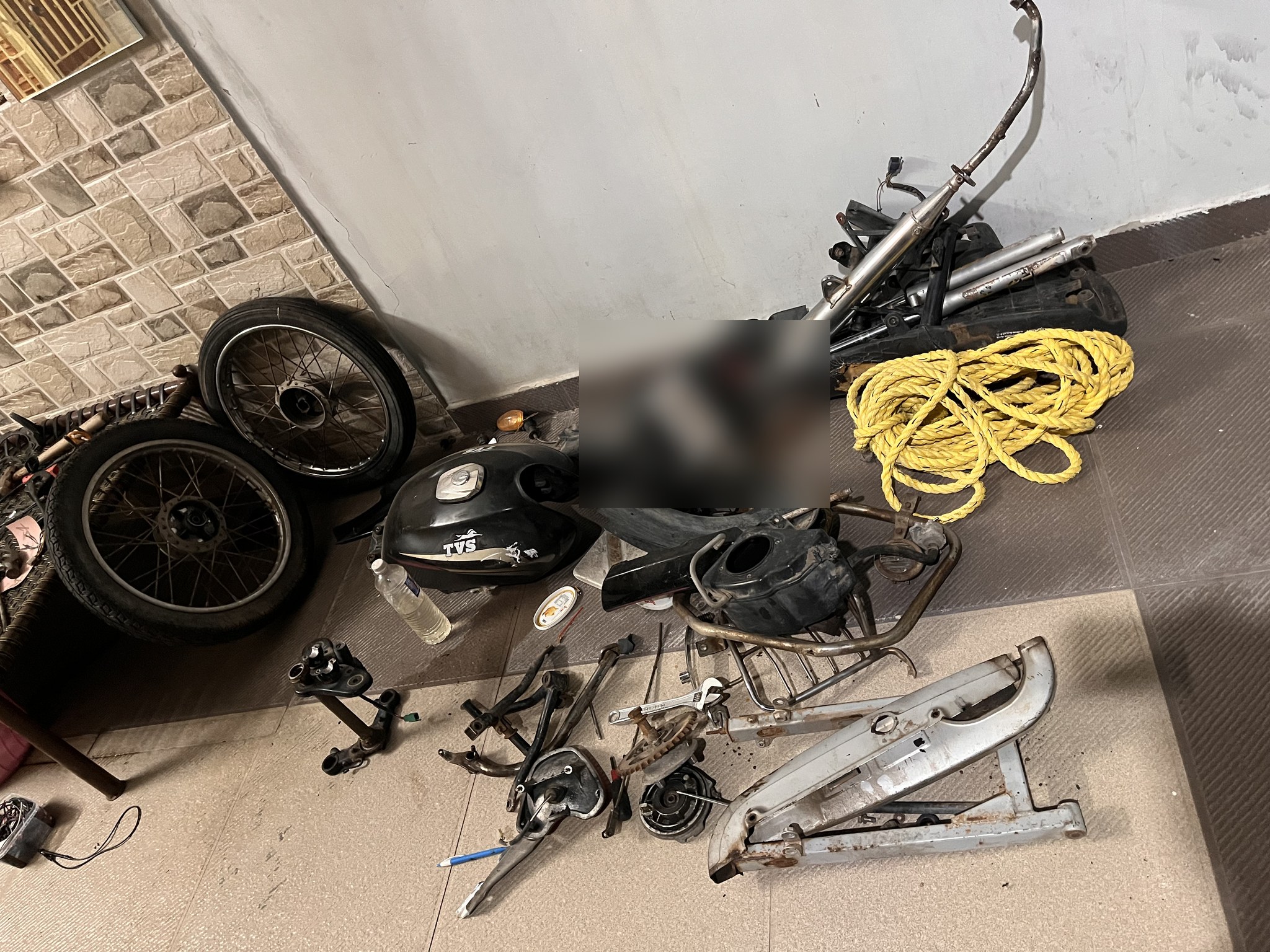
The harvest, laid out: two spoked wheels, the fuel tank, fork tubes, the old rusty silencer, the centre stand, the swingarm and a pile of brackets and fasteners.
✨ Restored & running
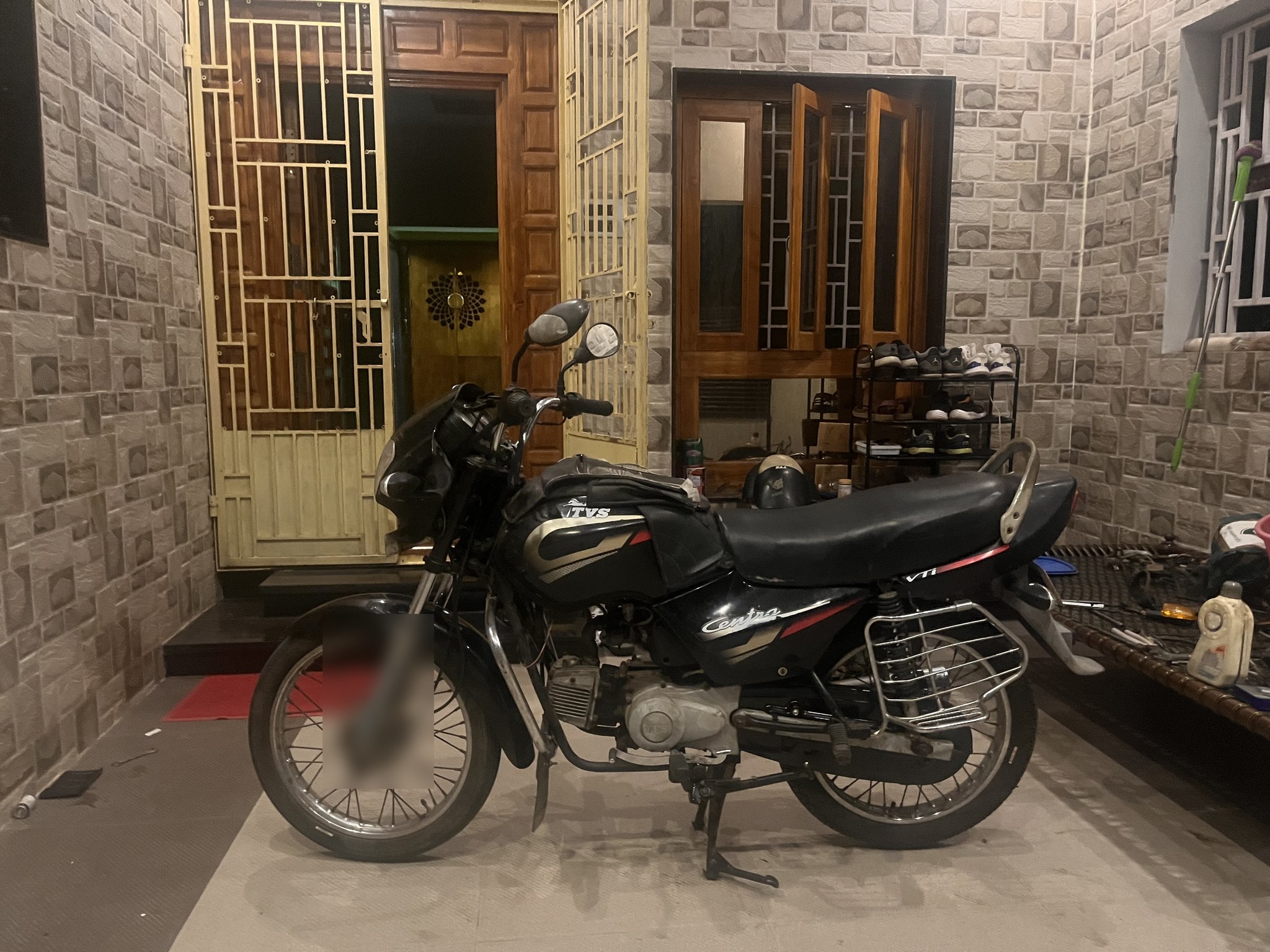
Back together — full bodywork, new seat, mirrors, the works — standing on its centre stand at home.
And running again, twenty years on.
🔧 What I learned
This project taught me as much as it fixed. A few things that stuck:
- Carburettor — how it meters fuel and air, and how the choke and throttle change the mix.
- Clutch plate — how the friction plates engage and disengage the engine from the gearbox.
- Starter coil — diagnosing the burnt coil and swapping in the donor’s good one.
- AC vs DC lighting — the big one. On the stock Centra the headlamp runs on AC straight from the magneto coil, so its brightness rises and falls with engine RPM and it won’t glow with the engine off. Converting the circuit to DC (fed from the battery through the rectifier/regulator) gives a steady, constant glow at any RPM — and light even when idling.
- Why an LED, not a halogen. A halogen headlamp bulb is ~30–65 W and pulls high current — too much for the small battery once it’s on DC. A modern LED is only ~15–30 W, draws far less, runs cool, and suits the converted system perfectly.
📸 Browse all the photos
Every photo is sorted by stage of the build. Open a folder to browse it, or see CATALOG.md for all of them with descriptions on one page.
| Stage | Photos | Stage | Photos | |
|---|---|---|---|---|
| Before the rescue | 7 | Silencer & exhaust | 2 | |
| Junkyard donor bike | 1 | Electrical & DC conversion | 19 | |
| Teardown & restoration | 19 | LED headlight | 1 | |
| The preserved engine | 4 | Parts, laid out | 8 | |
| Starter coil & magneto | 1 | Restored & running | 2 | |
| Speedometer & dash | 1 | |||
| Center stand | 2 |
About the bike
The TVS Centra is a 100cc, four-stroke commuter motorcycle from TVS Motor Company, launched around 2004 (it later became the TVS Star). Simple, economical, and built to run for decades — which is exactly what ours did.
A note on the folders
photos/— the pictures, sorted by stage, with descriptive names. These show up right here on the page.originals/— the full-resolution files straight from the camera, kept as an archive.- Registration plates and other personal details in the photos have been blurred for privacy.
A father-and-son restoration. Not a professional rebuild — a hobby, a bit of an education, and a way to give a faithful old bike a second life. 🧡